Passwords Are Dying: What Beginners Need to Know About Passkeys
We’ve all been there you try to log into your bank or email, only to realize you forgot your password.

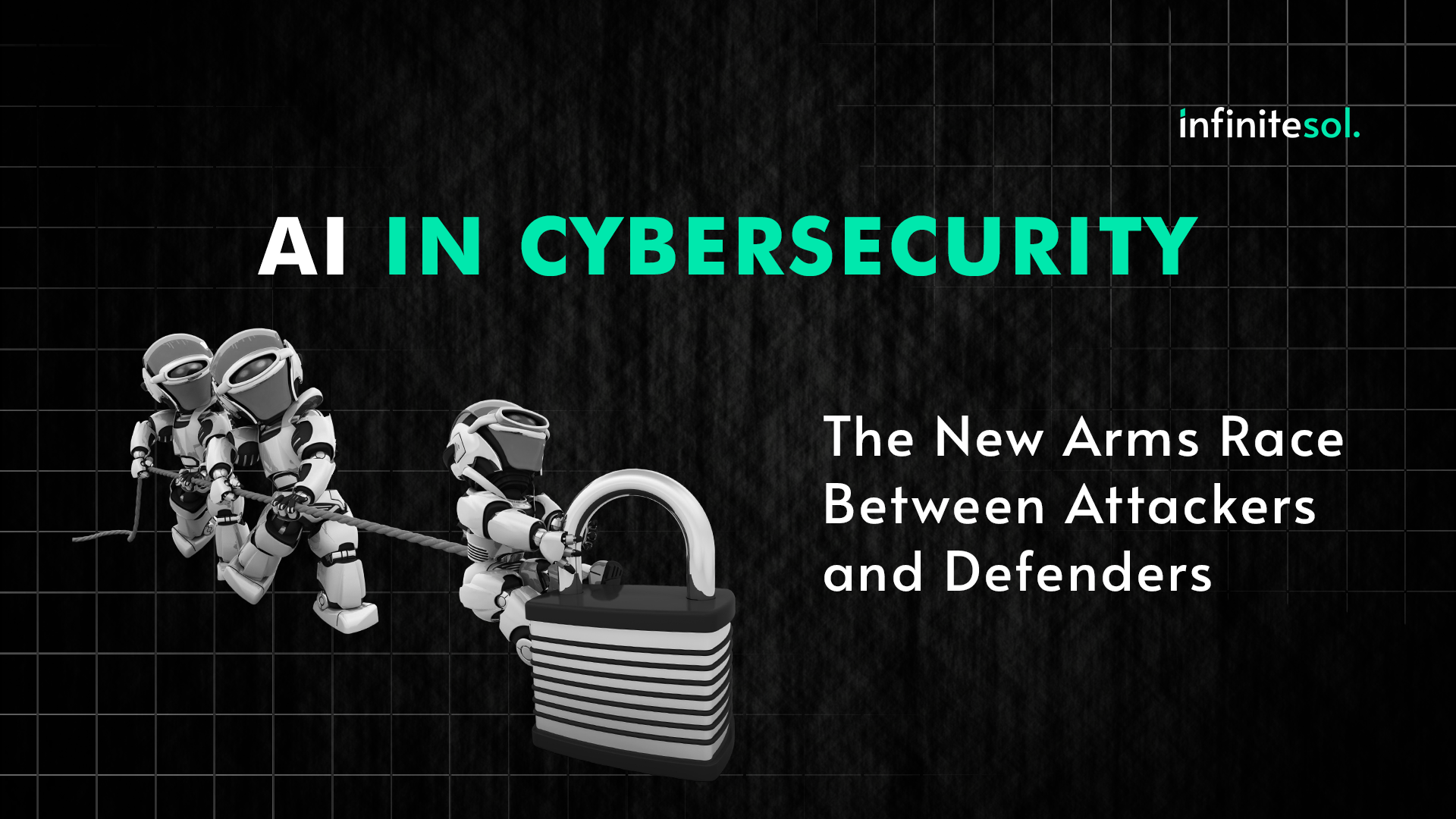
In the past decade, cybersecurity has evolved from firewalls and antivirus to something far more complex a race between machines.
Artificial intelligence has become both a defender and a weapon.
Attackers now deploy AI to craft convincing phishing campaigns, identify vulnerable networks, and even write malware that learns from its own failures.
Defenders, in turn, use AI to detect anomalies, automate responses, and predict breaches before they happen.
It’s no longer just humans vs. hackers.
It’s algorithm vs. algorithm.
The bad news: cybercriminals are early adopters.
They’ve learned how to exploit machine learning models to scale social engineering and accelerate attacks.
1. Intelligent Phishing
AI can now scrape social media, company websites, and public data to build eerily personalized phishing messages.
These aren’t the clumsy “You’ve won a lottery” emails of 2010.
They mimic tone, grammar, and even writing habits of executives.
Some AI models can generate a fake internal email chain complete with attachments to make the scam nearly undetectable.
2. Automated Vulnerability Scanning
Attackers use AI to map entire infrastructures in minutes.
Instead of manually probing for weak points, AI models identify misconfigured ports, outdated libraries, or leaked credentials then chain them together for maximum damage.
3. Adaptive Malware
Traditional malware follows instructions.
AI-based malware learns.
It observes how defenses respond, changes its code structure in real time, and hides in legitimate processes.
This is malware that mutates faster than human analysts can react.
The good news: defenders are smarter too.
Modern cybersecurity tools use machine learning not only to detect threats but to predict and pre-empt them.
1. Behavioral Analytics
Instead of searching for known signatures, AI observes how systems and people behave.
It builds baselines how often an employee logs in, what files they access, and what times they connect.
When something breaks the pattern, it triggers an alert often hours before a traditional system would notice.
2. Threat Intelligence Automation
AI helps security analysts process the overwhelming volume of threat data.
Infinitesol’s own MDR (Managed Detection & Response) systems ingest logs from thousands of sources endpoints, firewalls, and cloud services and prioritize alerts that matter.
That automation saves hours of human time and eliminates “alert fatigue,” one of the most dangerous weaknesses in modern security operations.
3. Predictive Defense
The ultimate goal is prevention through prediction.
AI models analyze historical incidents and external threat feeds to forecast attack patterns.
For example, if a specific ransomware strain begins targeting finance systems in one region, AI can pre-emptively strengthen similar environments worldwide.
That’s what we mean when we talk about “proactive defense.”
Here’s the reality most companies overlook:
When the two work together, the result is a security posture that’s faster, smarter, and more adaptable than either side alone.
At Infinitesol, our analysts and algorithms collaborate in real time:
AI in cybersecurity isn’t just technical it’s moral.
The same models used to protect can be used to exploit.
Deepfake audio can impersonate a CEO.
Text generators can create misinformation campaigns.
Automated intrusion tools can probe thousands of systems per minute.
Defending the digital world now means defending the ethical use of AI itself.
That’s why Infinitesol’s approach is built on three non-negotiable principles:
Security isn’t just what you protect it’s how you protect it.
Last year, one of our enterprise clients experienced a sudden spike in outbound data from a single endpoint.
It didn’t match any known malware signature; antivirus found nothing.
But our behavioral AI flagged it as “contextually suspicious.”
Within seconds, the system correlated multiple factors: unusual transfer size, late-night timing, and a new VPN exit node.
Before any human analyst intervened, the AI automatically quarantined the device and locked the user session.
Post-investigation revealed a compromised credential linked to a third-party contractor.
Incident contained. Zero data loss. 11 minutes total.
That’s the difference between reactive security and predictive defense.
The next wave of cybersecurity is autonomous resilience systems that don’t just detect and respond but repair themselves.
Imagine a network that recognizes a breach, isolates it, rolls back corrupted data, and reconfigures access all without downtime.
That’s the direction Infinitesol’s research is heading: self-correcting digital ecosystems where defense is continuous, invisible, and adaptive.
In that future, AI won’t just be a tool.
It will be the immune system of the digital enterprise.
AI is transforming cybersecurity into a living, evolving ecosystem one where learning never stops.
The same algorithms that write tomorrow’s attacks will also write tomorrow’s defenses.
The organizations that win will be those that blend human empathy with machine intelligence understanding both code and cognition.
At Infinitesol, we believe the future of protection isn’t reactive it’s predictive, ethical, and deeply human at its core.
Because no matter how advanced machines become, it still takes people thoughtful, vigilant, responsible people to decide what’s worth defending.
Infinitesol provides enterprise-grade cybersecurity services powered by AI-driven threat detection, behavioral analytics, and 24/7 managed defense.
We help businesses move from traditional protection to intelligent prevention where every signal, click, and decision makes the network stronger.